
Simple Conveyor Belts
by rearth · CurseForgeA basic conveyor belt mod. Adds spline-based item belts, that transport items from point A to B. Allows for item logistics in any shape and form.
Updated October 17
A basic conveyor belt mod. Adds spline-based item belts, that transport items from point A to B. Allows for item logistics in any shape and form.
Boss that uses Irons spells to attack you, copies your name, armor, and weapons!
Lightweight API to implement new axolotl variants.
Animated, adjustable RPG resource bars!
This mod change Waystones Recipes into create recipes
Makes your food and experience bars visible when riding on a horse.
An Iron's Spells 'n Spellbooks addon adding a wide variety of armor sets, curios, and equipment.
A simple currency/economy mod that allows you to safely trade in a multiplayer environment.
Descend into madness with new end biomes, forbidden magic, and more.
This mod adds a new arena structure to the game, fight waves of enemies with a boss at the end!
Grab a Knuckle, master the force and martial art. Spell Engine Add-On
Adds additional attributes to the game
Allows you to pat ANY loved and unloved living mobs in Minecraft!
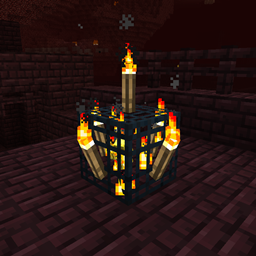
✔️ Disables mob spawners whenever they are surrounded by 5 torches.
Adds Ceramic Shears made of clay. (Forge, NeoForge, Fabric, Quilt)
A new fiery nether ingot with tools and armour that can almost turn you into a blaze.
Curios integration for Kubejs
🎴 Makes the totem of undying effect work when it's anywhere in the inventory.
Screenshots taken are copied to the clipboard.
Can drastically improve frame rates by limiting how far away tile entities and entities can render, with configurable ranges.
Adds a bunch of new hammers to the game!
API used in fzzyhmstrs mods that provides various utilities for Kotlin mods
Simple damage indicator mod that shows a floating health bar (or number) above entities. Additional features includes an attack direction indicator
🔨 All metal-containing items are recyclable in a furnace and return raw materials.
They're two different mod loaders that aren't compatible with each other. Forge is the older one and better suited to big tech and magic modpacks; Fabric is lighter, updates to new game versions faster, and hosts most performance mods. NeoForge is a Forge fork for newer versions, and Quilt is a Fabric fork. A Forge mod won't run on Fabric, and vice versa. Millida Launcher installs the right loader for you.
The one that matches your game version and loader. The “Install” button picks the file for you: Millida Launcher grabs the version for your modpack. A mod for 1.20.1 usually won't work on 1.21.
Click “Install” and Millida Launcher will download the mod, its dependencies and the right loader for you. To install a downloaded file manually, put it in the mods folder inside the game directory.
No. The Install button on a mod page opens Millida Launcher: it downloads the mod, its dependencies and the right loader into the chosen instance by itself. No CurseForge and no manual file copying.
1.20.1 is one of the most modded versions, especially on Forge: tech, magic, RPG, furniture, weapons. Pick 1.20.1 in the version filter to keep only mods with a file built exactly for it, then pick Forge or Fabric next to it.
On Android, yes: Millida Launcher runs the Java edition on a phone, and mods work there just like on a PC, though light ones run much better than heavy ones. Minecraft PE (Bedrock) cannot load PC mods — it has add-ons instead, in the Minecraft PE mods section.
The usual picks are Simple Voice Chat for proximity voice chat, Waystones for fast travel, Xaero's Minimap and something big to work on together, such as Create. Mods that change the world must be installed by every player and on the server, while client-side ones like a minimap or performance mods are up to each player.
A mod is an add-on that changes the game itself: it adds blocks, mobs and mechanics, or speeds up world rendering. It isn't installed into the game directly but on top of a loader — Forge, Fabric, NeoForge or Quilt — and it's the loader that decides whether the file will run. That's why every card here lists both the game version and the loader: two mods with the same name for 1.12.2 Forge and 1.21 Fabric are two different files, and mixing them up means a crash on launch.
The most searched Minecraft mods are weapon, furniture, horror and performance mods: each theme has its own collection, and links to the themes and the most wanted versions are in the Popular block. Version 1.20.1 on Forge still holds the most big tech, magic and RPG mods, while the fresh 1.21.11 and 26.2 get Fabric and NeoForge mods fastest.
One mod in the catalog, one page. Every version the author has released is listed on its card: pick your game version and loader right there instead of jumping between ten similar pages. Each file shows its size, release date and checksum, and the mod itself shows the author, license and a link to the original source. Files whose license allows rehosting are stored with us and download directly — no link shorteners, timers or ad redirects. If the license forbids rehosting, the button honestly takes you to the author.